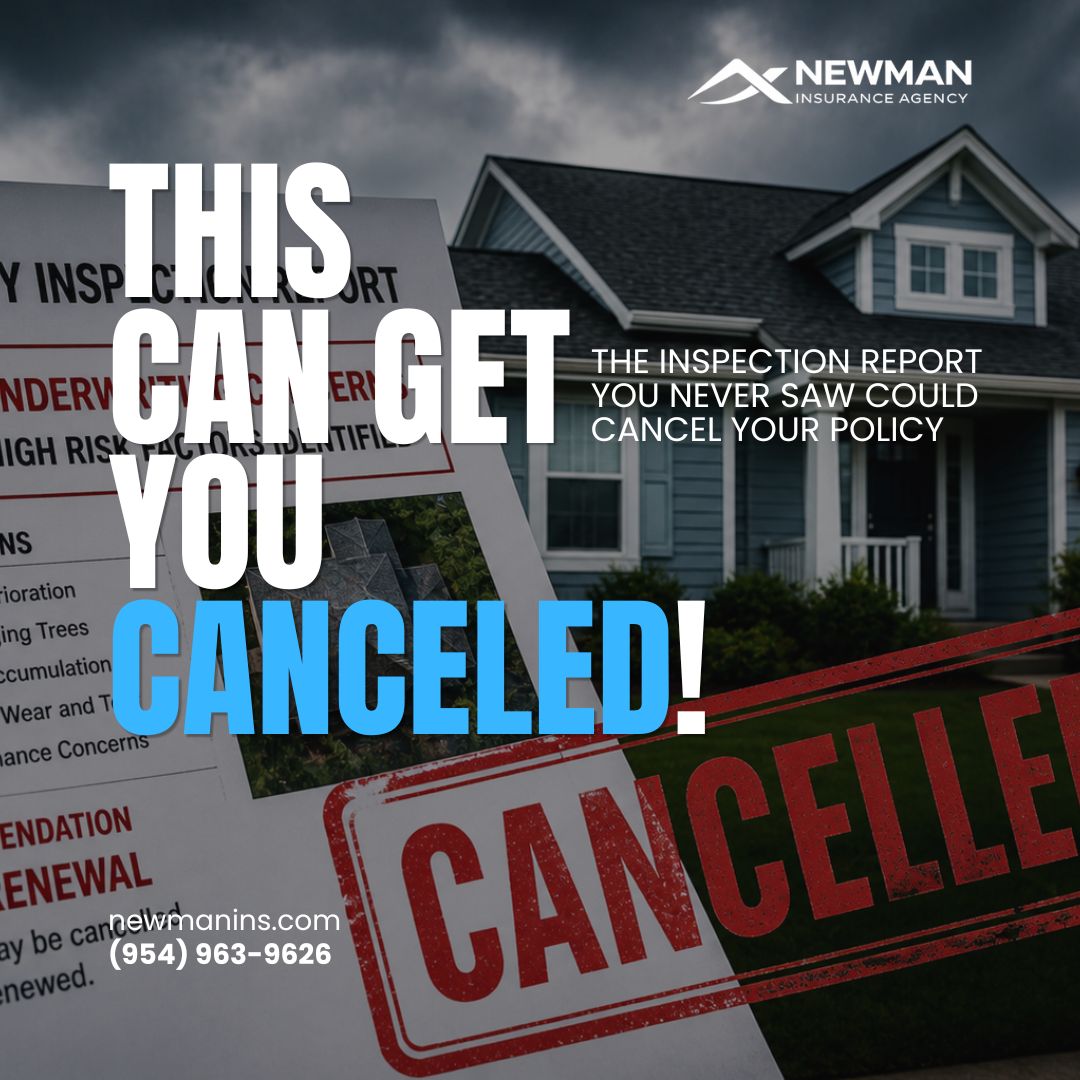
The Inspection Report You Never Saw Could Cancel Your Policy
Most homeowners assume inspections only happen when someone shows up at the property.
That is no longer how insurance works.
Today, your home can be inspected multiple times a year without a single phone call, email, or visit.
And those inspections can directly impact whether your policy is renewed or canceled.
How These Inspections Actually Happen
Insurance carriers now rely heavily on third party inspection vendors, aerial imagery, and property data feeds.
This includes satellite images, drone captures, and drive-by reports collected without homeowner interaction.
These reports are fed directly into underwriting systems that evaluate risk.
In many cases, decisions are made based solely on what those images show.
What They Are Looking For
The focus is almost entirely on visible exterior conditions.
- Roof condition and signs of wear
- Debris accumulation
- Tree limbs near or over the structure
- Exterior maintenance issues
- General property upkeep
These factors are used to determine whether a property meets the carrier’s underwriting standards.
What Happens After a Property Is Flagged
Once an issue is identified, the process moves quickly.
Homeowners may receive:
- A notice requiring repairs within a set timeframe
- A change in policy terms or premium at renewal
- A non-renewal notice if the issue is not addressed
In some cases, the first time a homeowner becomes aware of the issue is when that notice arrives.
The Real Problem
These reports are not always accurate or current.
A roof that was replaced months ago may still appear as damaged in older imagery.
A minor cosmetic issue can be flagged as a structural concern.
And once that information is in the system, it is treated as fact unless the homeowner actively challenges it.
If there is no response, the carrier proceeds based on what they see.
Why This Matters
This is how policies are canceled or non-renewed over issues that may no longer exist.
No conversation. No on-site verification. Just a decision based on data.
If your home appears to be a higher risk from an underwriting perspective, it will be treated that way.
What You Should Do
Maintain the exterior of your property consistently.
Address visible issues as soon as they appear.
Document repairs and improvements with photos and receipts.
Do not assume that no inspection means no evaluation.
Bottom Line
Underwriting has changed.
Your home is being evaluated whether you realize it or not.
And in many cases, those evaluations are happening without your knowledge.
Know Before It Becomes a Problem
If you are not sure how your property would be viewed by an insurance carrier today, now is the time to find out.
It is far easier to correct an issue before it affects your policy than after a non-renewal notice is issued.