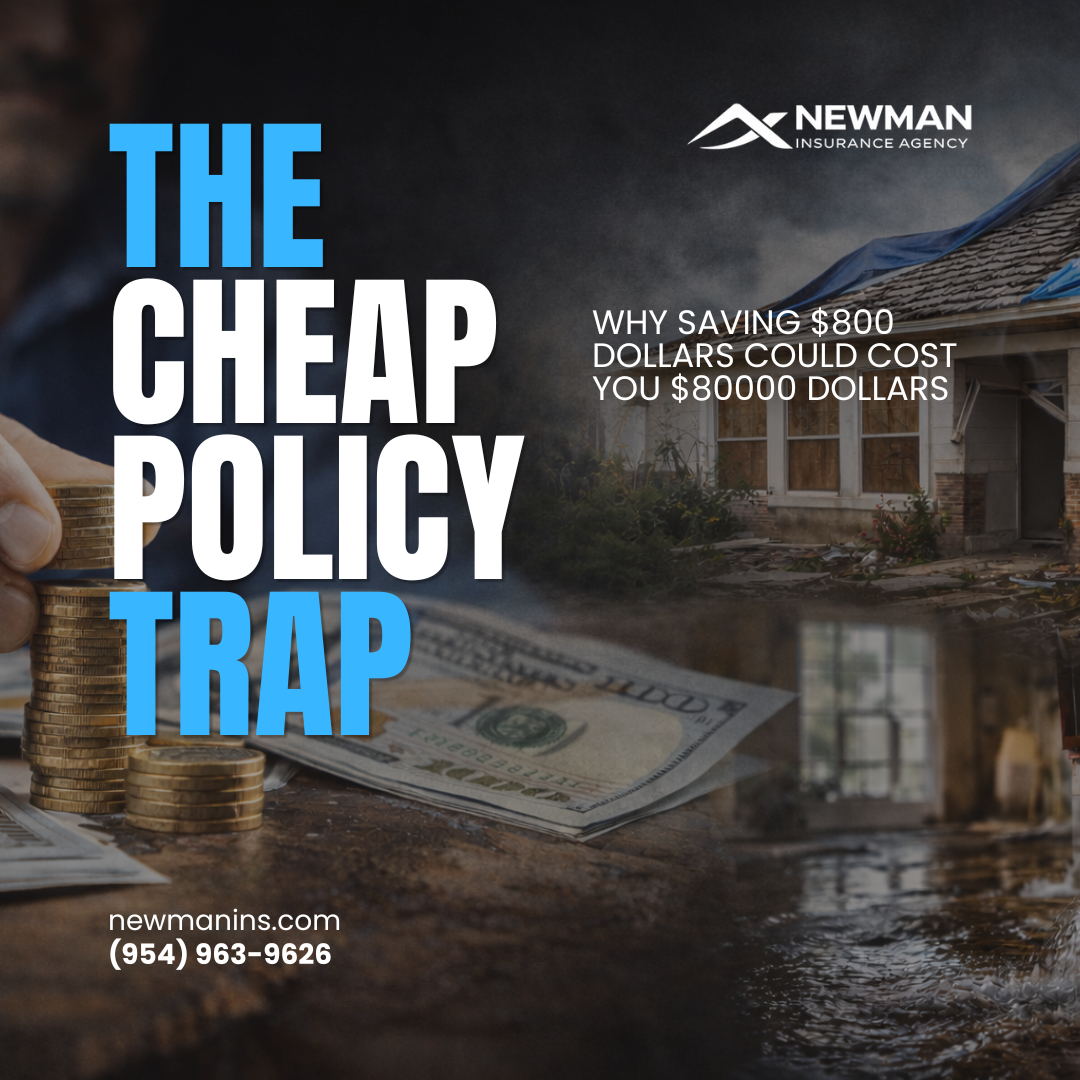
The Cheap Policy Trap: Why Saving $800 Could Cost You $80,000
Most homeowners believe they are protected simply because they have an insurance policy in place.
In reality, many policies are structured in ways that significantly limit what is paid during a claim.
The result is that homeowners often discover coverage gaps only after damage has already occurred.
Actual Cash Value vs. Replacement Cost
The most common issue is the difference between actual cash value and replacement cost.
Policies written on an actual cash value basis deduct depreciation. For example, a roof that costs $25,000 to replace may only generate a payout of $9,000 after depreciation is applied.
The remaining balance becomes the responsibility of the homeowner.
Water Damage Misconceptions
Water damage is another major area where misunderstandings occur. Many assume all water-related losses are covered.
In practice, coverage is often restricted. Slow leaks, mold, and sewer backup frequently fall outside standard policy terms or require additional endorsements.
Deductibles and Hidden Costs
Deductibles also play a significant role. Lower premiums are often paired with higher deductibles.
A two percent hurricane deductible on a $500,000 home results in a $10,000 out-of-pocket expense before insurance contributes.
Policy Limitations to Watch
Many lower-cost policies contain limitations such as capped roof payouts, cosmetic damage exclusions, or named peril coverage.
If the cause of loss is not specifically listed, the claim may be denied.
The Bottom Line
The key takeaway is that price alone should never drive the decision when selecting coverage.
The true value of a policy is determined by how it performs under stress.
Homeowners should review their policies carefully, focusing on deductible structure, valuation method, and coverage limitations.
A properly structured policy is not designed to be the cheapest option. It is designed to respond effectively when a loss occurs.